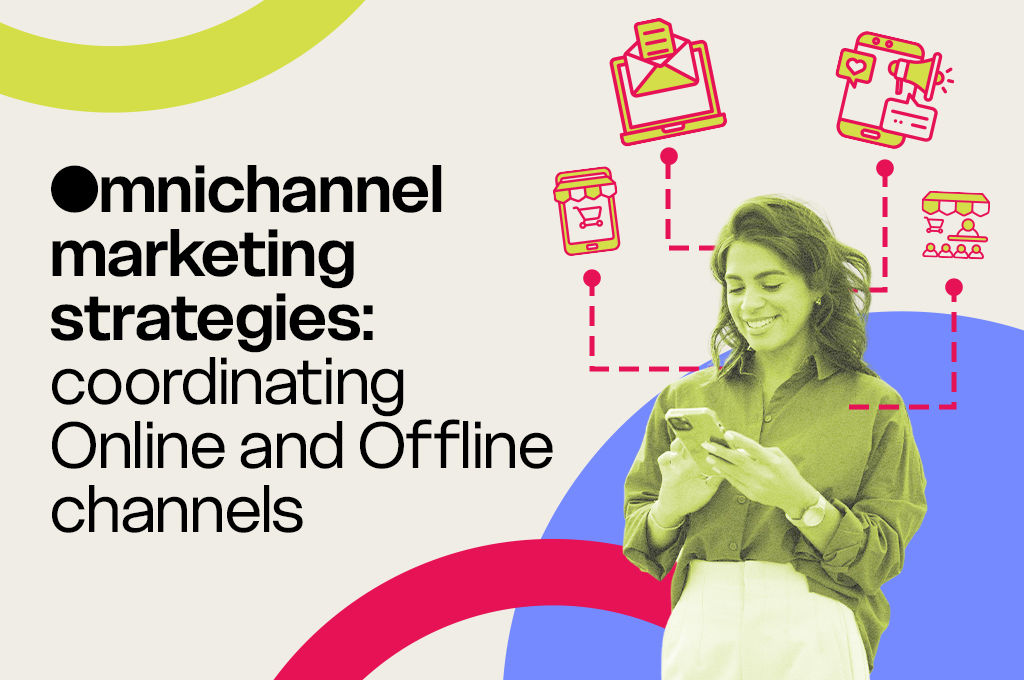
When does a customer decide to buy something? It doesn’t necessarily happen in front of a screen or inside a store. More often, it happens in between, along a chaotic, non-linear journey that today spans dozens of different channels. Omnichannel marketing exists to make that journey smooth, recognizable, and consistent, regardless of the customer touchpoint. As we often say, it’s not about being everywhere, it’s about being present in the right way, with a message that adapts to each channel without losing brand identity. The goal is to be where it truly matters: where your target audience can be reached. In a landscape where consumers interact with more than 50 touchpoints before converting, this is no longer a competitive advantage, it’s the baseline requirement to stay in the market.
Why omnichannel is essential in 2026
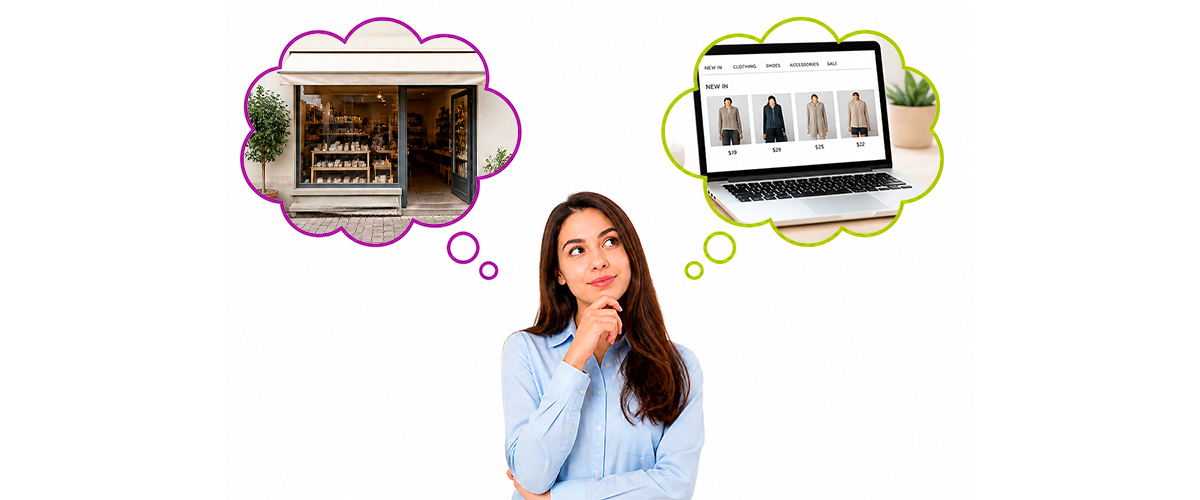
The distinction between online and physical stores is becoming less useful in describing real purchasing behavior. A customer might search for a product on Google, read reviews on Instagram, become increasingly convinced through a brand newsletter, visit a store to see the product in person, and then purchase online because of a discount. Or do the opposite, or all of this within a single hour.
Companies that still manage these channels as separate silos, with different teams, messages, and data, end up speaking to the same person as if they were three different people.
What happens then? The user becomes confused, the brand experiences friction, and conversions are lost.
A well-structured omnichannel strategy ensures coordination across all touchpoints, consistency in the customer experience, and a direct impact on revenue and sales. According to industry studies, omnichannel customers spend more and return more often than those who interact through a single channel.
Mapping the end-to-end customer journey
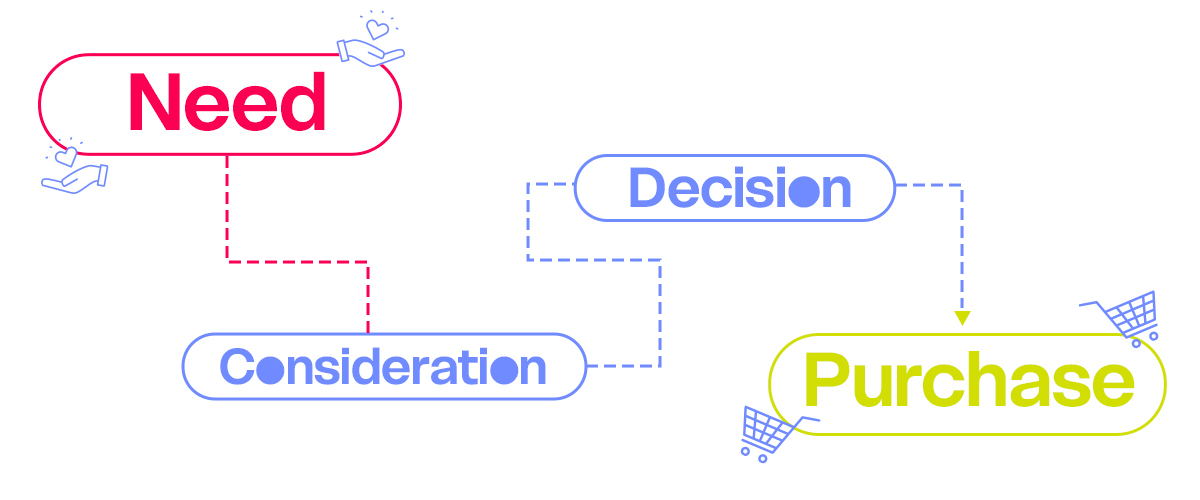
Before choosing tools and technologies, you need a map. The customer journey is the path a customer takes from initial awareness to purchase and beyond. Understanding i, and tracking how it evolves, means moving away from siloed, intuition-based campaigns and toward a structured approach based on real customer interactions.
The See–Think–Do–Care model
A useful framework for designing the customer journey is the See–Think–Do–Care model, which identifies four stages corresponding to different customer mindsets:
- See: The customer is not yet ready to buy. Content should capture attention, not push for a sale.
- Think: The customer starts evaluating options, this is where SEO, comparison tools, and reviews come into play.
- Do: The customer is ready to buy and expects a frictionless process.
- Care: The customer has already purchased. The goal is to build loyalty and encourage repeat purchases.
Each stage requires different content, channels, and KPIs. Measuring only final conversions means focusing on just the last stretch of a much longer journey.
Unified data: CDP and Zero-Party data
Omnichannel marketing relies on a key principle: having a complete view of customer behavior across all channels. Without unified data, coordination remains theoretical. A Customer Data Platform (CDP) aggregates data from multiple sources, e-commerce, CRM, apps, and physical stores, to build a single, real-time customer profile. More advanced CDPs integrate AI-driven insights to anticipate behavior, personalize communication, and optimize marketing actions. At the same time, zero-party data, data that customers voluntarily share, such as preferences and purchase intentions, is becoming increasingly important. These data are valuable because they are accurate, up-to-date, and collected with a privacy-first approach. In many cases, they are also the most reliable source for personalization.
E-commerce and physical retail synergy

To effectively integrate online and offline channels, three main models have become standard:
- BOPIS (Buy Online, Pick Up In Store) allows customers to purchase online and collect in-store, reducing wait times and increasing foot traffic.
- Ship-from-store turns physical locations into mini logistics hubs, improving delivery speed and inventory efficiency.
- Drive-to-store strategies use digital channels (geolocated ads, app coupons, email campaigns) to bring qualified traffic into physical stores.
These approaches share the same principle: connecting online and offline instead of managing them separately.
Additionally, QR codes in-store act as a direct bridge between physical and digital experiences, allowing customers to access product pages, read reviews, compare options, or contact support.
A simple detail that can make the difference between a completed sale and a missed opportunity.
Marketing Automation and AI-Driven personalization
Coordinating dozens of channels manually is not sustainable, this is where marketing automation becomes essential.
It enables workflows triggered by real user behavior:
- Cart abandonment triggers an email
- Product page visits trigger push notifications
- Subscription expirations trigger personalized SMS
More advanced AI models go beyond reacting—they anticipate.
- Dynamic recommendations show relevant products based on browsing and purchase history
- Predictive models identify customers likely to churn
- Next best action systems suggest the most effective action for each user
The result is a level of personalization that feels useful rather than intrusive.
Omnichannel Media Mix and attribution
How much is each channel really worth? This is one of the most complex, and important, questions in omnichannel marketing.
Several tools help provide clarity:
- Data-driven attribution models (such as GA4) assign value across multiple touchpoints
- Marketing Mix Modeling (MMM) evaluates the overall impact of marketing activities, including offline factors
- Incrementality tests measure the real effect of campaigns
A key concept is ROPO (Research Online, Purchase Offline): many customers research online and buy in-store.
Tracking this behavior is essential to avoid underestimating the impact of digital channels on physical sales.
Privacy, consent, and the cookieless future
The shift toward a cookieless world is often seen as a challenge, but it also represents an opportunity to build more transparent relationships. Leading companies are investing in:
- Consent Management Platforms (CMPs) to manage user consent in a structured and compliant way
- Server-side tracking to reduce reliance on third-party cookies and improve data accuracy
- First-party data and alternative identifiers (such as hashed emails and authenticated IDs)
Companies that wait for the market to solve the cookie issue risk falling behind. Those investing in first-party data today are building a long-term advantage.
Omnichannel marketing: do it right, do it now
Omnichannel marketing is not a trend or an additional layer, it’s a shift in perspective. It means moving from channel-based thinking to experience-based thinking, where:
- Online and offline are fully integrated
- Data and creativity work together
- Automation supports human interaction
When done correctly, the results are clear: more conversions, higher revenue, and stronger customer loyalty. If you’re evaluating how to structure or evolve your omnichannel strategy, we can help, from customer journey analysis to channel integration.
share