Fresh off the Artemis II mission, imagine yourself in space, looking down and reflecting on what’s happening on Earth. Among the countless daily events, some more meaningful than others, billions of people unlock a smartphone, type a query, scroll through a feed, click on an ad, and maybe make a purchase.
It may seem like a random sequence of actions, but this is exactly where the game of digital marketing is played. And if you want your business to be an active player, you need to understand how the entire field works, not just the individual moves.
From digital marketing activities and emerging trends to the key questions every entrepreneur or marketer should be able to answer, we’ve gathered everything in this complete guide to digital marketing for you.
Digital Marketing: what it ss and why it’s different from everything else
We talk a lot about digital marketing, but what is it, exactly? In its simplest form, digital marketing includes all activities related to promotion, communication, and sales carried out through digital channels such as search engines, social media, email, websites, apps, podcasts, and more. However, this definition alone can be misleading.
The key difference compared to traditional marketing is measurability. In digital marketing, even the smallest action leaves a trace: every campaign generates data, and every touchpoint can be analyzed and optimized. This transforms marketing from an intuitive art into a discipline that blends creativity and data-driven analysis in almost equal parts.
Another defining feature of digital marketing is the ability to work across multiple marketing channels simultaneously, creating consistent experiences rather than isolated messages. When done right, the result is a cohesive digital ecosystem that works for your brand 24/7.
Why Digital Marketing is crucial in 2026
The year 2020, marked by the COVID-19 pandemic, acted as a brutal accelerator: companies that had postponed building their online presence for years were forced to create it in just a few weeks. Many succeeded, many did not. But the real takeaway is clear, the level of competition in digital marketing has significantly increased and has continued to grow ever since.
Today, the question is no longer “Do I need to be online?” but rather “How do I stand out in an already crowded digital environment?” The answer lies in a clear digital marketing strategy, high-quality content, and a deep understanding of audience behavior.
Video, AI and Social Media: the engines of change
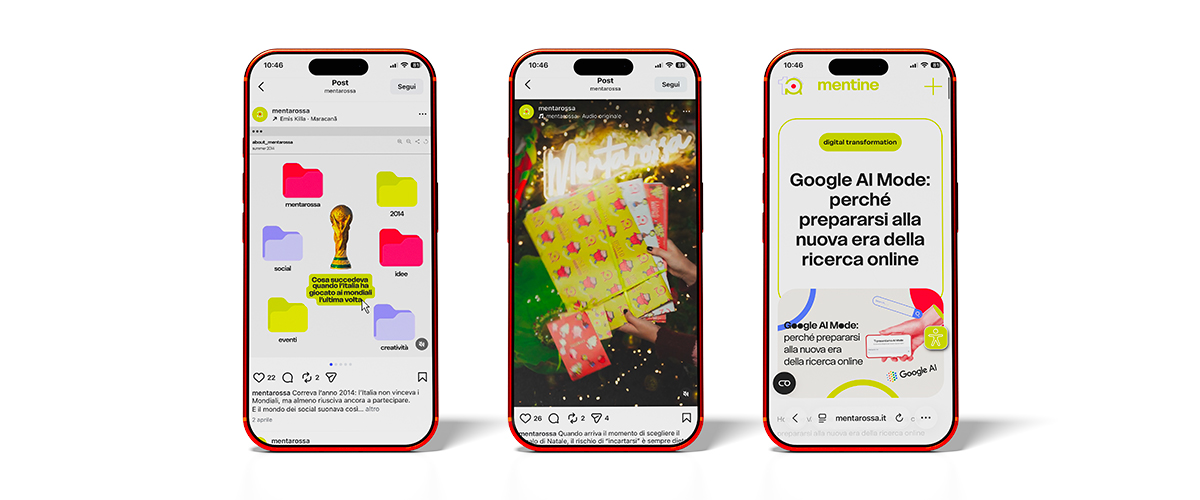
There are three key elements currently shaping how brands communicate in digital marketing.
The first is video marketing. According to recent estimates, video content generates on average three times higher engagement compared to text-based content across most platforms. Short-form formats such as Reels, TikTok videos, and Shorts have transformed storytelling and made narrative speed an essential skill.
TikTok
Instagram (Reels feature)
YouTube (Shorts feature)
The second is artificial intelligence. AI is no longer a conference topic, it has become a fully operational tool within digital marketing. AI systems now support content generation, campaign personalization, customer behavior prediction, and automated ad budget management. At the same time, marketers must adapt to changes such as Google AI Mode, which may reduce direct website traffic while increasing the importance of being cited as an authoritative source based on user queries.
The third is the evolution of social media. Platforms are no longer simple distribution channels but full-fledged commercial ecosystems where users discover, learn, get inspired, and purchase products directly.
If you are ignoring one, two, or all of these elements, you are effectively giving visibility and conversions to your competitors. Brutal, but true.
Omnichannel strategy and the customer journey
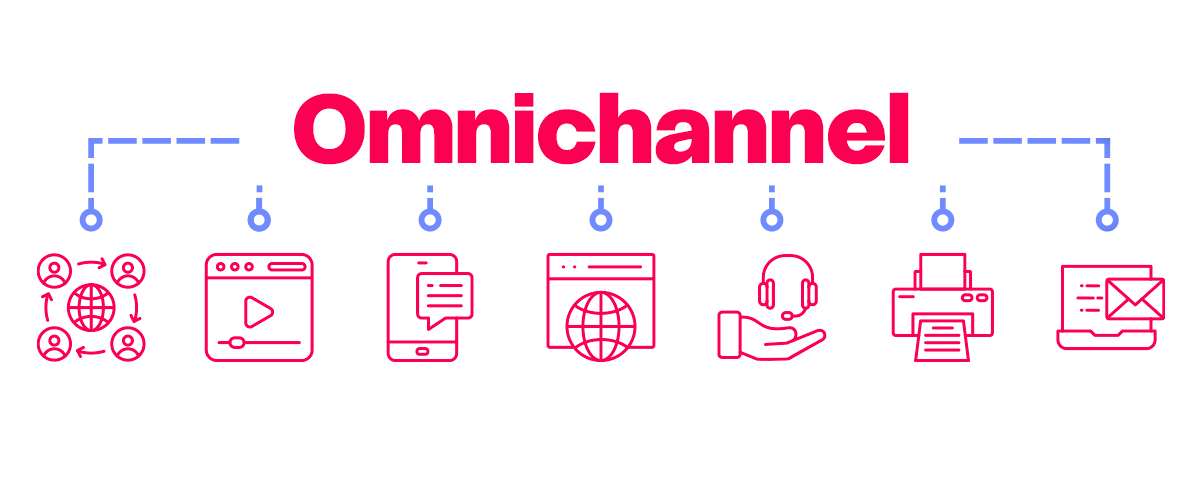
Does anyone still think that omnichannel simply means “being everywhere”? It doesn’t. An omnichannel strategy ensures that every touchpoint, both online and offline, becomes part of a single, unified experience, where messaging, tone of voice, and value proposition remain consistent.
To make it concrete: a customer interacts with a brand on Instagram, then visits the website, and later goes into a physical store. Across all these touchpoints, the user should perceive continuity, not fragmentation.
Designing this continuity requires a precise understanding and mapping of the customer journey: the sequence of stages, awareness, consideration, decision, purchase, and loyalty, that every user goes through before and after conversion. Mapping this journey is not a theoretical exercise; it is the most effective way to identify where opportunities are being lost and where to focus investments within a digital marketing strategy.
Zero-Party Data and authentic personalization
Third-party data is progressively disappearing, while the value of zero-party data is increasing, information that users intentionally and proactively share, such as preferences, interests, and purchase intent.
Collecting this data requires trust. Trust is built through value. And value is created through useful content, personalized experiences, and transparent communication.
The advantage of this approach is the creation of a stronger and more resilient community compared to any aggressive retargeting campaign. A customer who trusts your brand is a customer who returns, and they return because you have built a relationship, not just a campaign.
Content Marketing: The Fuel of the Digital Ecosystem
If content marketing were an element, it would be water: invisible when it works well, but disastrous when it’s missing or done “just for the sake of it.” Every digital marketing activity, from SEO to paid campaigns, from email marketing to social media, depends on content to exist.
EEAT, Featured Snippets, and Content Hubs
Google evaluates content through the EEAT framework (Experience, Expertise, Authoritativeness, Trustworthiness): real-world experience, demonstrable expertise, recognized authority, and perceived trustworthiness. Together, these signals define the quality standard that every piece of content should meet within a modern content marketing strategy.
Featured snippets, the boxed answers that appear at the top of search results above organic listings, represent one of the most competitive areas in content marketing today. To win them, content must answer user questions clearly, precisely, and in a structured way, anticipating search intent rather than simply reacting to it.
The most effective structure for organizing content at scale is the content hub model: a pillar article that covers a topic in depth, supported by satellite content pieces that explore related subtopics. This architecture improves topical relevance in the eyes of Google Search and creates guided user journeys that naturally lead toward conversion.
Paid Media: search, social ads and programmatic advertising
Rule number one in paid media: don’t let a small budget limit your thinking, because paid advertising can help you scale it. As always, the key is to define clear objectives and start seeing advertising not as a cost, but as an investment within a broader digital marketing strategy.
Google Ads and Performance Max
Google Search Ads remain one of the most powerful tools in digital marketing: high user intent, precise targeting, and accurate measurement. However, the landscape has evolved significantly. Performance Max, Google’s automated campaign format, has redefined how budgets are allocated by optimizing all available assets in real time, text, images, video, and product feeds, based on declared objectives.
The risk of relying entirely on automation is losing control over creative quality. The most effective strategy combines machine intelligence with human oversight: clear goals, high-quality assets, and continuous analysis of ROAS (Return on Ad Spend).
Social commerce and programmatic advertising
Social commerce, the ability to complete a purchase directly within a social platform without leaving the app, is one of the most interesting experiential evolutions in recent years. Platforms like Meta, TikTok, and Pinterest have integrated native shopping features that dramatically shorten the customer journey.
On the other hand, programmatic advertising enables automated ad buying through real-time bidding systems, allowing brands to reach highly profiled audiences across a vast network of publishers. It is an extremely powerful tool, but only when used with the right level of expertise and strategic control.
E-mail marketing, automation and lead nurturing

Contrary to what has been said for the past twenty years, email marketing is not dead. In fact, for many businesses it remains one of the highest-ROI channels in digital marketing—provided it is used intelligently. The key is not the volume of sends, but the relevance of the message in relation to the user’s position within the marketing funnel.
Behavioral Segmentation and AI-Driven Triggers
Social media marketing and community building
Social media marketing in 2026 is fundamentally different from what it was just five years ago. Anyone aiming for full-funnel brand building must understand that short-form, vertical content now dominates the landscape. A single Reel can reach tens of thousands of users without any advertising budget, while static posts often struggle to gain visibility.
However, frequency and consistency alone are not enough. A clear social media strategy is essential, one that defines objectives, tone of voice, content formats, and publishing cadence for each platform within a broader digital marketing strategy.
Live shopping, live-streamed sessions where products are showcased and purchased in real time, has already transformed retail in Asia and is rapidly expanding across Europe. For many brands, it represents a powerful mix of community engagement, entertainment, and immediate conversion.
At the same time, micro-influencers (typically accounts with between 10,000 and 100,000 followers) are replacing big-name creators in many influencer marketing strategies. The reason is largely statistical: micro-influencers tend to deliver higher engagement rates, their audiences are more niche and relevant, and the overall cost-effectiveness is significantly better.
Privacy, cookieless future and first-party data
The world of digital marketing is undergoing one of the most profound transformations in its history, driven largely by regulation and platform changes: GDPR, ePrivacy rules, Apple’s tracking restrictions starting with iOS 14, and the gradual elimination of third-party cookies from Chrome. The result is clear, the cookieless marketing era is no longer a future scenario, but the present reality businesses must adapt to.
First-Party Data: the new strategic asset
In this context, first-party data, data collected directly by a company through its own digital properties such as websites, apps, CRM systems, and email platforms, has become a critical strategic asset within digital marketing.
Companies that have historically built a structured database of consent-based, well-profiled contacts now hold a significant advantage over those that relied primarily on third-party targeting through external platforms.
Building a coordinated and transparent data collection strategy requires technical, legal, and communication investment. However, it is an investment that safeguards long-term marketing effectiveness, regardless of how platforms like Google or Meta evolve in the future.
More advanced organizations are now adopting Customer Data Platforms (CDPs), which centralize proprietary data and enable personalized activations across all channels, without relying on cookies or external identifiers. This shift is becoming a cornerstone of modern data-driven marketing.
KPIs, CRO and continuous optimization
Running a digital marketing strategy without measurement is like driving blindfolded: you might move forward, but you have no idea where you’re going. Defining the right KPIs (Key Performance Indicators) is the first step in turning data into actionable decisions within any digital marketing strategy.
What to measure and how to interpret it
KPIs vary depending on the objective. Here is a practical framework:
- Visibility objectives: impressions, reach, brand search volume
- Traffic objectives: organic sessions, CTR (click-through rate), keyword rankings
- Conversion objectives: conversion rate (CR), cost per acquisition (CPA), ROAS (Return on Ad Spend)
- Retention objectives: repeat visit rate, lifetime value (LTV), NPS (Net Promoter Score)
CRO (Conversion Rate Optimization) is the discipline focused on systematically improving these metrics by working on user experience, landing page structure, and message quality. It is not about big redesigns or radical changes, but rather about continuous testing of small hypotheses through A/B testing, heatmaps, and funnel analysis, incremental improvements that, over time, generate significant performance gains.
The key point is that optimization is not a project with an end date. It is an ongoing process that forms part of the daily routine of any mature marketing team or agency operating in digital marketing.
Accessibility: inclusion as a standard, not an option
There is one topic that the digital marketing world has long underestimated and can no longer afford to ignore: accessibility. Designing accessible digital experiences has always been an ethical responsibility, but today it is also a legal requirement (with new European directives making it mandatory for many categories of websites) and a clear competitive advantage.
Moreover, an accessible website, campaign, or app performs better for everyone. Accessibility best practices, such as semantic structure, proper color contrast, keyboard navigation, and alternative text for images, not only improve usability for users with disabilities, but enhance the overall user experience across the board. They also positively impact SEO performance, since search engines interpret websites in a way that is similar to how a screen reader processes content.
Inclusive communication is also a brand positioning choice. It signals a company that cares about people, not just conversions. In a market saturated with identical messages, this difference is noticeable, and increasingly decisive within modern digital marketing strategy.
Digital Marketing starts with a vision
We have explored a broad landscape that includes content marketing, email automation, programmatic advertising, privacy, social media, and accessibility. What do all these digital marketing activities have in common? A single, concrete objective: driving real value for the brand.
Instead of activating as many channels as possible, the smarter approach is to choose the right ones, manage them consistently, and measure every action with discipline. Over time, this creates a digital ecosystem that continues working for the business even when the entrepreneur is not actively monitoring it.
If you are building your online presence from scratch, or aiming to take it to the next level, you need a clear digital marketing strategy.
Tell us about your project: get in touch with us, and let’s identify together which digital marketing activities make the most sense for your business right now.
condividi