Important partner supporting sustainable Made in Italy
Life Magis – MAde Green in Italy Scheme is a project born with the aim of making high-quality Italian Made products with high environmental standards recognizable on the market, through the relevant brand and the use of PEF (Product Environmental Footprint).
On behalf of the Sant’Anna School of Advanced Studies, we designed a digital communication strategy with the aim of communicating the core of the project to all the target audiences involved. Life Magis’ partners are research institutions and universities, trade associations, consortia, and cooperatives, and various supply chains are represented in the project: from the agri-food sector to window and door frames, and tanning.
THE challenge: to simplify technical language and bring the population closer to more conscious consumption.
Is it possible to communicate sustainability without being preachy?
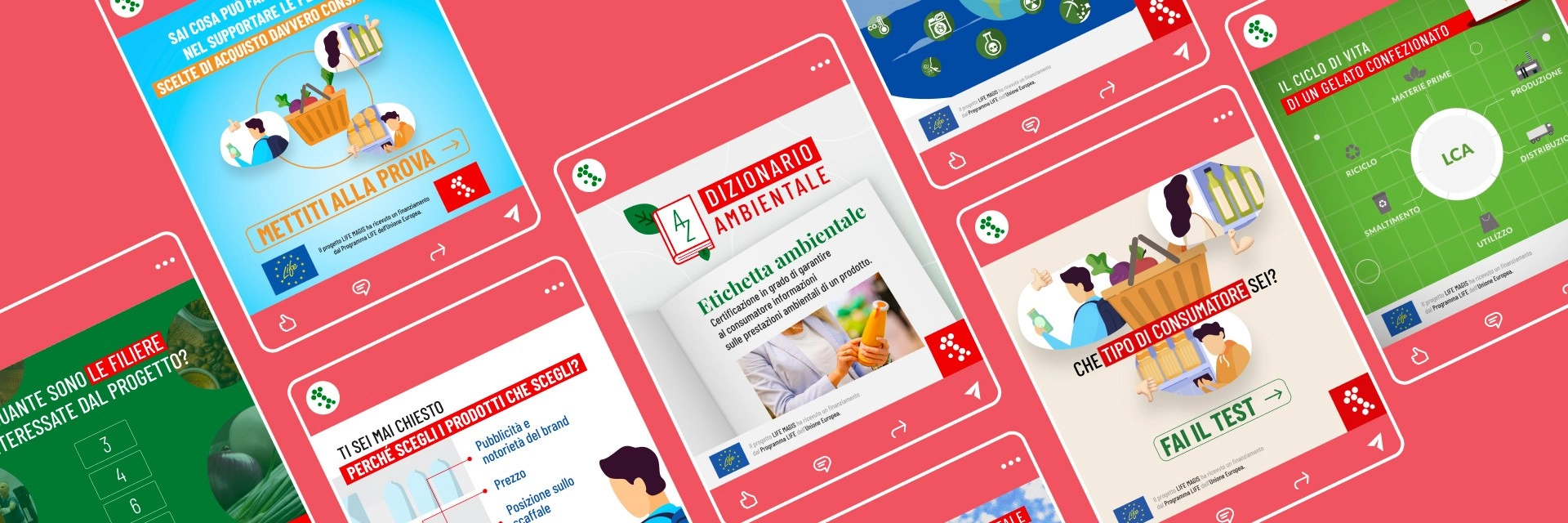
We did it by choosing a ToV supported by a simple, two-dimensional, and very colorful visual identity. In this way, we spoke to a cross-sectional target, reaching and being understood by Millennials and Boomers as much as by younger generations.
Because changing purchasing habits starts with awareness but even before that, with engagement. The first phase of the project was, in fact, informational.
We designed a strategic campaign with a dual objective: to inform consumers about the consequences of their purchasing behavior and how this behavior affects the environmental profile of products, and to make companies aware of the importance of reducing the environmental impact of their products, an aspect that, among the many advantages, would make them more competitive in the market.
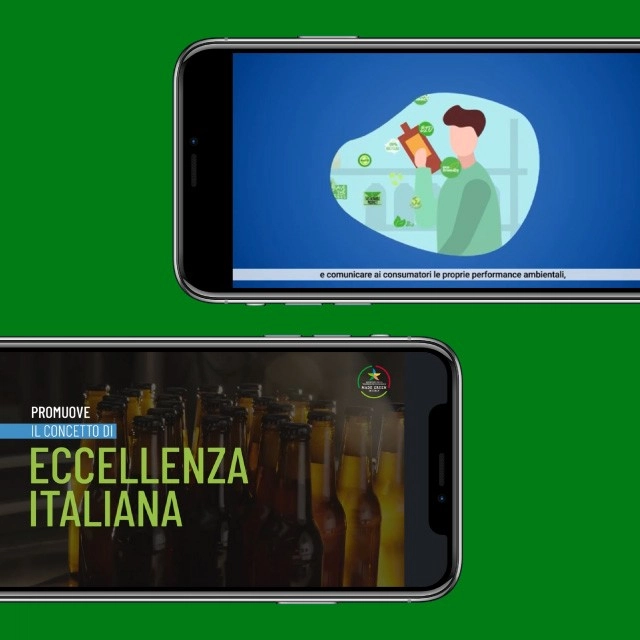
Careful, detailed, and, above all, consistent storytelling with the path taken by Life Magis up to that point was the starting point for the creation of two videos, one of which entirely in motion graphics, both in Italian and English. The videos illustrate in detail what the Made Green in Italy scheme consists of and what response the PEF gives to the growing demand for “green” products from consumers.
We translated a complex European project into a simple story.
The videos and the development of the right ToV were the phase preceding the creation of a detailed editorial plan, designed to create social engagement and acquire leads.
How was it possible to achieve the set objectives without trivializing such an important and deeply felt issue?
It was necessary to work differently than usual. Day after day, box after box of the editorial calendar, we had to win the trust of a user, often poorly informed, without appearing pedantic or excessively didactic.
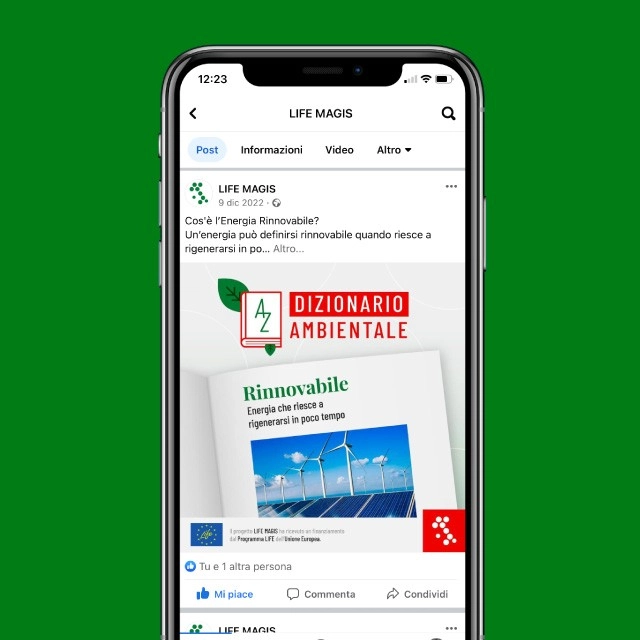
The creation of an environmental dictionary, multiple-choice questionnaires related to the topic of environmental impact, and a social media advertising campaign yielded the desired results, with a total reach of over 4,200,000 users.
Looking beyond the numbers achieved in the final report, if in the period preceding the project the knowledge and dissemination of the topic were entrusted to a few technical presentations, things have decidedly changed since then.
Consumers and companies have shown their interest in this topic, actively participating in the dissemination of a project that still has much to tell.