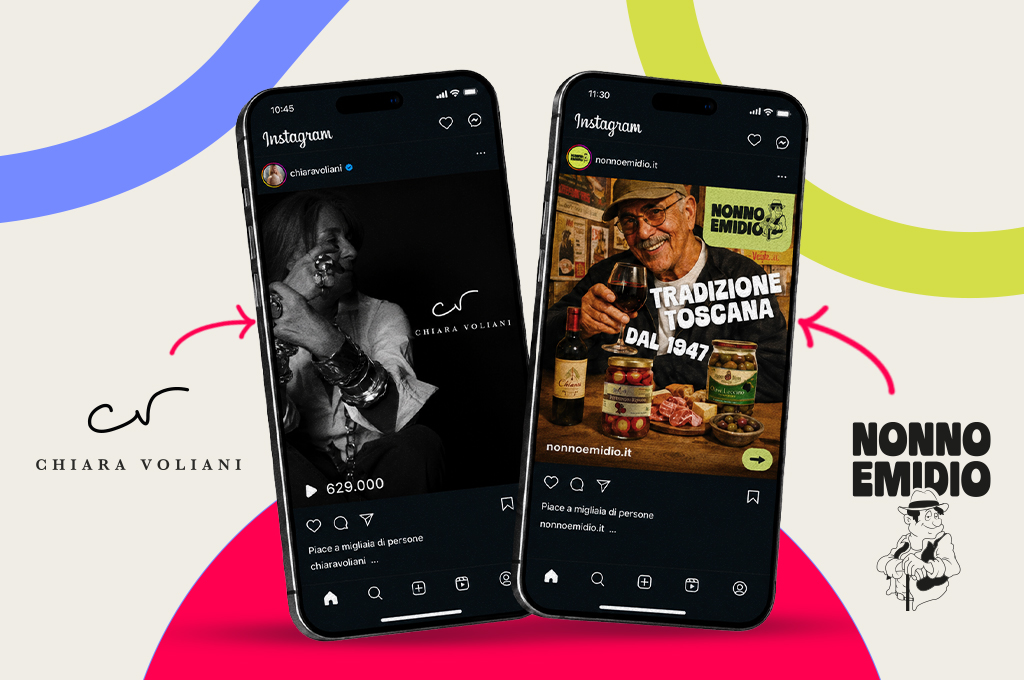
Imagine you’re at a dinner. Someone starts telling a story, nothing extraordinary, maybe just a bad day or a trip gone wrong, and before you realize it, you’re holding your fork mid-air, fully hooked, waiting to hear what happens next. That’s the power of storytelling. And it works exactly the same way when the story comes from a brand, a company, or a project.
Contrary to what you might think, effective storytelling isn’t a talent reserved for novelists or filmmakers. It’s a powerful communication and branding tool that the smartest companies use to turn products into experiences and customers into communities. But how does storytelling actually work? Why is it so persuasive? And how can you build a narrative that people remember?

Why Does Storytelling Work?
Before diving into techniques, it’s worth understanding what happens in the mind of someone listening to a story, because it’s far more complex than with any other type of content. When we read a list of data or product features, our brain activates the language-processing areas responsible for decoding text. But when we read a story, sensory and motor areas light up too, the same ones that would activate if we were actually experiencing that situation. Narratology calls this phenomenon “narrative transportation” because we are literally carried into another world.
According to research from the Stanford Graduate School of Business, stories are remembered up to 22 times more than facts alone. Not twice—twenty-two.
This has direct implications for how we communicate a brand or a product. A company that lists certifications speaks to the rational part of the brain. A company that tells how it helped a real person solve a real problem speaks to both logic and emotion. And even the most rational purchase decisions are far more emotionally driven than we like to admit.
Effective storytelling delivers two key benefits at the same time:
- It captures attention (a well-told story is hard to abandon halfway through)
- It builds memorability (narrative details stick, while raw data fades away)
That’s why digital storytelling has become a cornerstone of modern content marketing. It may look like a trend, but it’s actually rooted in human biology.
The Pillars of an Irresistible Story
Every story that works, from Homer to Pixar, from a strong LinkedIn post to a paid advertising campaign, shares a foundational structure. It’s neither a coincidence nor a mechanical formula. Instead, it reflects the way the human mind processes events and makes sense of reality.
The Protagonist: Someone the Audience Can Relate To
Every story needs a hero. In corporate storytelling, this doesn’t mean the brand must be the protagonist, on the contrary, the brand often works better as a guide or ally rather than the hero.
The real protagonist is the customer, the employee, or the community, someone the audience can identify with, whether they are reading, watching, or listening.
Amazon has mastered this approach: its protagonists are us, with our passions, needs, and everyday lives. The brand stays in the background, but it remains essential to the story because it helps us find what we need to achieve our goals and aspirations.
The key question is always the same: does your audience recognize themselves in the character at the center of your story?
The Conflict: Without Tension, There Is No Story
Conflict is the engine of any narrative. It doesn’t have to be dramatic, it can be subtle, everyday, almost insignificant, but it must exist.
A B2B software brand might describe the frustration of a team losing hours every week to manual processes. A supplement company might tell the story of someone who wants to feel better but doesn’t know where to start.
Without a problem to solve, there is no reason to keep reading, because narrative tension is the fuel of attention. The more relatable the problem is, the more the audience feels personally involved and drawn into the story.
The Climax and Resolution: When the Brand Enters the Story
The climax is the turning point, the moment when things change. And here, naturally and never forcefully, the brand can enter the narrative as a solution, a tool, or a catalyst for transformation.
The resolution doesn’t need to be a perfect “happily ever after.” Instead, it should be credible, concrete, and measurable. The best narrative case studies show real outcomes, supported by real numbers, and clearly explain what has actually changed.
The Hook: The First Crucial Seconds

What applies to a social media video also applies to an article: if the first lines don’t hook the reader, it’s as if the rest doesn’t exist.
An effective hook can be an unexpected question, a counterintuitive fact, or a scene placed in medias res. The goal is to create a small cognitive gap, something the brain feels compelled to resolve, and use it to pull the reader into the body of the content.
Archetypes and Buyer Personas: Telling Stories to the Right People
Carl Gustav Jung theorized archetypes as universal models of behavior and symbolism rooted in the collective unconscious. Decades later, marketing adopted them as tools to define a brand’s narrative identity. Today, working with archetypes is a way to find and maintain direction while building stories that resonate with a specific audience.
The twelve classic archetypes, from the Hero to the Mentor, from the Magician to the Caregiver, should not be seen as rigid labels but rather as narrative orientations. A tech brand positioning itself as a Magician, capable of transforming reality through talent, innovation, and creativity, will tell very different stories from a brand aligned with the Rebel. Archetypal consistency is essential to building a recognizable narrative over time.
However, archetypes alone are not enough; they must be combined with buyer personas. Knowing that your ideal customer is a 35–45-year-old marketing manager, under constant performance pressure and increasingly skeptical of “one-size-fits-all” solutions, provides critical insight for shaping stories that speak directly to their real frustrations and aspirations.
Effective storytelling should never rely on generic narratives told “just for the sake of it,” but on stories tailored to the people who will actually read them.
Tone of Voice and Narrative Consistency
A story can be perfectly structured, with all its archetypes in the right place, but if it is told in the wrong voice, it loses its impact. Tone of Voice is more than a “writing style”: it is the sum of a brand’s values translated into language. It is the difference between sounding authentic and sounding constructed.
Narrative consistency requires alignment between tone, values, and medium. A brand that uses formal, institutional language on its website, suddenly becomes informal and playful on social media, and sends bureaucratic emails, is not telling a coherent story, instead, it is confusing its audience.
Effective brand storytelling lives across all touchpoints, not within a single piece of content.
Practical Guidelines for a Consistent Tone of Voice
Here is a checklist to help you define and maintain your Tone of Voice:
- Define three or four adjectives that describe your brand’s voice. Be careful: don’t choose the ones you wish represented your brand, but the ones that actually reflect it. Then make sure every piece of content adheres to them.
- Build a glossary: the words you use, and the ones you avoid. If you are a young, direct brand, you might want to avoid terms like “optimize” or “industry leader,” for example.
- Adapt the register to the medium while keeping the core tone consistent. An Instagram post will naturally differ from a newsletter, but someone who reads both should still recognize the same voice.
- Test your content with people outside your team: do they perceive the tone you intended to convey? If not, the issue is not the reader but the content itself.
- Review your guidelines at least once a year. Brands evolve, and so must their voice, without losing recognizability.
Storytelling and Italian Companies
Clients often tell us they are “too small” for storytelling, assuming it’s something reserved only for large corporations. In our experience, this usually happens because SMEs believe they have nothing interesting to say. Spoiler: that’s never true, it’s just often difficult to know where to start (and how to keep going) when building an effective narrative.
Storytelling is especially important for Italian businesses because it’s what turns information into memorability, makes brands recognizable, and helps companies stop being just suppliers and instead become part of people’s stories.
Content Marketing and Storytelling: Building a Narrative Ecosystem
We are here to make a strong statement: storytelling is not a post, a campaign, or a video, just as a strategy is not a single piece of content. Storytelling is an ecosystem because, in modern content marketing, narrative only works when it is structured across multiple levels and formats, following a pillar content logic that holds everything together.
The pillar content is the core asset: an in-depth article, a comprehensive guide, or an industry report that covers a topic relevant to your audience in a complete and authoritative way. From this foundation, smaller cluster content pieces branch out, related articles, social posts, newsletters, videos, that explore specific aspects and link back to the pillar through internal linking.
From an SEO perspective, this structure strengthens topical authority across the domain. From a narrative perspective, it builds a long-form story distributed over time, guiding the reader through a continuous journey.
Blog series work in the same way: instead of a single article exhausting a topic, you create episodic content (like a TV series), where each installment adds a piece of the narrative while leaving something open for the next one. This mechanism builds habit, encourages return visits, and allows complex topics to be explored with the depth they deserve.
From here, content can expand across channels, from blogs to social media, from speaking presentations to case studies. Narrative case studies are one of the most underrated tools in content marketing. Telling a real result through a story structure (situation, challenge, solution, outcome) is far more persuasive than any product feature list.
Visual and Video Storytelling: Show, Don’t Tell
“Show, don’t tell” is one of the fundamental principles of narrative writing, and it applies just as strongly to digital storytelling. Saying a product “is innovative” convinces no one. Showing it in action, in a real context, with measurable results, does.
Visual storytelling operates on a different cognitive level compared to text: the brain processes images much faster than words, and visually conveyed information is remembered more easily. This is not about replacing text with visuals, but about using them strategically to amplify the narrative message.
Infographics
An infographic condenses complex data into a visual space that would otherwise require long paragraphs to explain. But be careful: the best infographics are not just colorful charts and tables. They contain a narrative structure, a beginning, a turning point, and a conclusion, that guides both the eye and the thinking process of the viewer.
Short-form video
Short-form video formats such as Reels, TikTok, and YouTube Shorts have completely reshaped the rules of visual storytelling. The strict time constraint (often under 60 seconds) forces extreme synthesis, which paradoxically strengthens narrative structure: every second must earn its place.
Brands that excel in this format understand that entertainment and information are not opposites, but complementary forces.
Motion graphics

For abstract concepts such as processes, data, or mechanisms, one of the most effective solutions is the use of motion graphics. Animating an infographic or visualizing how a service works through movement creates an intuitive understanding that neither text nor static images can fully replicate.
This approach works equally well for educational and promotional content, making complex ideas immediately clearer and more engaging.
Micro-storytelling for social media
Social media has reinvented the rules of storytelling. What was once simply about adapting existing formats to different platforms now requires a complete rethinking of narrative structure itself, based on how people actually consume content within their feeds.
The Hook in the First Three Seconds
On platforms like Instagram, TikTok, or LinkedIn, content competes with thousands of other stimuli in an attention span measured in fractions of a second. The first three seconds of a video, or the first line of a caption, are everything.
The hook must be strong enough to interrupt the scroll: a provocative question, a counterintuitive statement, or a scene placed in medias res that immediately raises curiosity.
There’s no need to be sensational. What matters is creating a clear, honest reason for people to keep watching or reading your content.
Carousels: Storytelling in Chapters
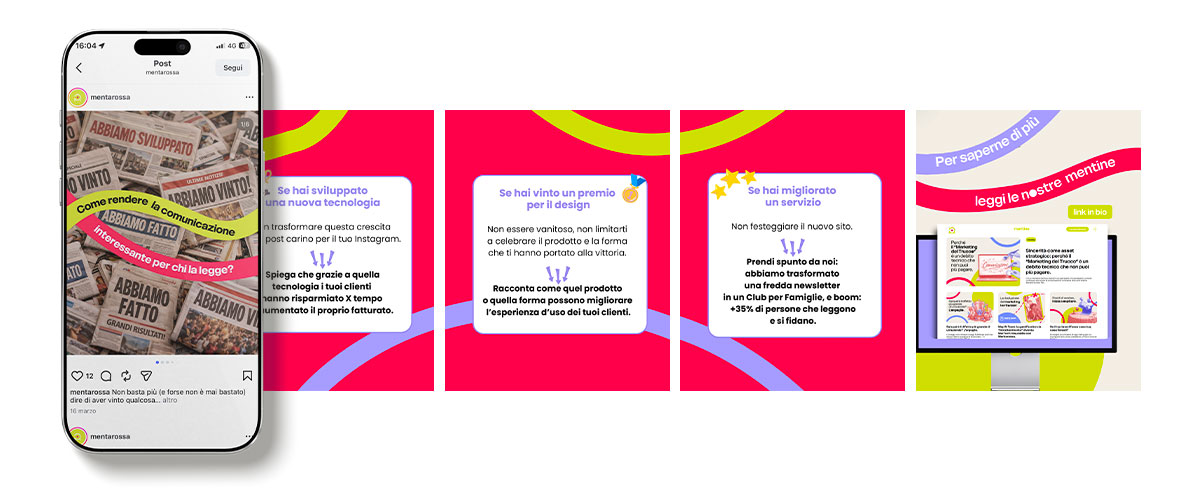
Carousels, especially on Instagram and LinkedIn, have become one of the most effective formats for micro-storytelling. The swipe-based structure mirrors narrative tension: each slide is a chapter, and every transition requires a small act of intention from the user.
Platform data consistently shows that carousels generate higher engagement rates than single posts because they actively involve the audience in a guided experience.
There is a clear logic behind their structure: the first slide is the hook, the middle slides develop the content with a rhythm that must remain engaging, and the final slide delivers the resolution, most often a call to action.
User-Generated Stories: When the Audience Becomes the Storyteller
Transmedia and Omnichannel Storytelling: One Narrative Across Multiple Channels
Modern communication takes place across multiple channels and platforms. People constantly move between different touchpoints, a podcast during the commute, a newsletter in the morning, a live event, a social media post in their free time, and the challenge for brands is to build a narrative that maintains consistency and depth across all of them.
Transmedia storytelling, as theorized by Henry Jenkins, goes beyond simply repeating the same message across channels. Each medium contributes to the story in a distinct way, adding layers of meaning that would not exist in isolation. One channel deepens understanding, another personalizes the message, another creates physical connection, while others amplify and generate conversation.
Podcasts and Newsletters: Depth and Trust

The podcast is a medium of depth and intimacy. People listen during moments of active attention, at the gym, in the car, or while walking, and the format allows for much richer narrative development than a social media post ever could. Including a podcast in a brand storytelling strategy means choosing to build a long-term relationship with an audience that has already given its time and attention.
The newsletter operates on a similar principle: it arrives in a private space (the inbox), at a specific moment, and speaks to someone who has explicitly chosen to receive that content. In a digital landscape dominated by unpredictable algorithms, the newsletter remains one of the few channels where a brand truly controls the distribution of its own story.
Live Events: Turning Story into Experience
No digital content can replicate the impact of a shared physical experience. Live events—conferences, workshops, pop-ups, presentations—are moments where a brand’s story becomes tangible, engages all the senses, and creates shared memories.
Integrating them into a storytelling strategy means designing the event as a chapter within a broader narrative, rather than as an isolated episode.
The goal of omnichannel storytelling is not to be everywhere, but to be recognizable everywhere. The story may change in format, length, and tone, but the voice, values, and narrative arc must remain consistent.
Storytelling: The Skeleton of Narrative
Storytelling is the backbone of brand communication. It is what makes information memorable, brands recognizable, and companies shift from being simple providers to becoming part of people’s stories.
To build an effective narrative, you need:
- a clear method
- a deep understanding of your audience
- the right archetypes aligned with your brand identity
- consistent tone of voice across all channels
- strategic distribution of the story across formats and media
And it doesn’t end there: storytelling is a continuous process of listening, telling, and adapting.
If you are looking to build or evolve your brand communication through storytelling, from defining your tone of voice to producing editorial content, from digital storytelling to an omnichannel strategy, we can help you find your voice and use it effectively. Let’s connect: tell us your story, and let’s build together the one you want to share with the world.
condividi