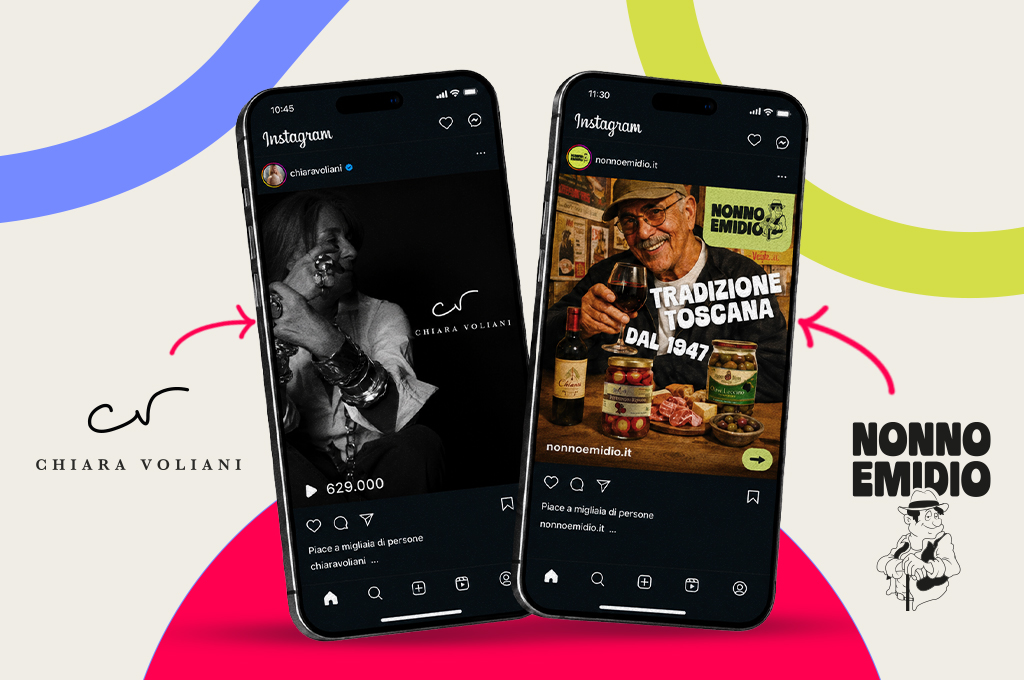
What do the brands we end up loving have in common, the ones we talk about with friends, defend, and even forgive when they make mistakes? Spoiler: it’s not about budget or follower count; it’s about how they make us feel.
Building a brand in 2026 means putting emotions at the center. To succeed, you need to create a meaningful brand ecosystem that resonates with your audience. In other words, it’s essential to develop a system where brand and identity align seamlessly with experience, communication, and values, consistently, recognizably, and across every touchpoint. It’s a complex puzzle, challenging, adventurous, and, for us, incredibly exciting.
Why Is Branding Holistic Today?
Until a few years ago, branding was fairly basic for most companies: name, logo, colors, and tagline. Today, that vision is as outdated as a fax machine in a startup, and thankfully so. Modern consumers interact with brands across dozens of touchpoints: social media, physical stores, customer care, packaging, newsletters, and e-commerce, and they evaluate the brand across all of them simultaneously. That’s why brand communication must now be truly omnichannel.
Brand identity, customer experience, and performance work together like the legs of a table: if one is unstable, the whole structure wobbles. A brand with a flawless visual identity but a poor customer experience is not a strong brand, in fact, it will feel like a well-disguised lie. This disconnect disappoints users, who are increasingly quick to fall out of love with their favorite brands (especially in a highly competitive landscape), making it clear just how essential a holistic approach has become.
It’s time to stop managing branding in silos and start asking a more important question: how does someone feel every time they interact with us? That’s why, before telling your story to the world, you should first understand the world you want to speak to. It may sound obvious, yet a surprising number of brands jump straight into the “let’s create content” phase without conducting a proper analysis. In the end, most of them realize they’ve wasted time, money, and valuable resources.
Competitor Research: Look Outward Without Copying Inward
Mapping your competitors to find inspiration doesn’t mean copying themm, it means understanding where the space is already crowded and where there’s still room to stand out. In that “silence,” you often find your greatest opportunity to emerge.
To be truly effective, competitor analysis should cover three key levels:
- Direct competitors (those offering the same product or service as you),
- Indirect competitors (those fulfilling the same need in a different way),
- Aspirational brands (the ones you admire—even outside your industry). This last group is often where the most interesting ideas and strategic insights come from.
Is a UVP Just “One Sentence”?
A Unique Value Proposition (UVP) answers one of the most uncomfortable questions in branding: why should someone choose your brand, products, or services? The answer should avoid vague statements, clichés, and empty superlatives (“excellence you can always trust…”). Instead, it must be specific, measurable, and relevant to your target audience.
A widely used formula to craft a strong UVP is: we help [target audience] achieve [clear, tangible result] through [differentiating approach], unlike [main alternative]. While a UVP may seem like just a simple sentence, making it feel authentic and credible is incredibly challenging.
Purpose, mission e vision
Brand Identity: How You Look, Sound, and Speak
A brand’s identity is the way it exists, expresses itself, and shows up in the world, it goes far beyond just a logo designed with the “perfect” color palette. In 2026, with the rise of podcasts, short-form video, and smart speakers, a brand can be recognized even before it visually appears.


The System, Not the Symbol
A strong visual identity is like good grammar: end users don’t notice the work behind it, and when it’s done right, it feels so natural that they don’t even think about it. A poor visual identity, on the other hand, makes everything feel off and forced. Colors, typography, photography style, iconography, motion design, every element communicates something, even when it’s not explicit.
There’s a key tool that helps teams create and maintain a consistent brand identity: brand guidelines, the brand’s instruction manual to consult every time something new is created. Visual consistency can increase brand recognition by up to 80%, and recognition is the foundation on which trust is built.


The Personality That Emerges from Words
How a brand writes and speaks is just as defining as how it looks at first glance, through colors, images, shapes, photography, and design. It would be a mistake to think that tone of voice is only about words; it’s deeply connected to every other element of communication: visuals, styling, graphics, video editing, and everything that contributes to delivering a message. Still, as Nanni Moretti famously said, “words matter.”
A well-defined tone of voice, together with the language a brand chooses, turns communication into something instantly recognizable and distinctive. A brand can decide to be formal or informal; what truly matters is staying consistent with its identity, goals, and values while remaining authentic.
You don’t have to be provocative like Taffo, for example. That kind of tone of voice isn’t for everyone and can even feel forced if it doesn’t align with a brand’s true personality.


Brand Identity You Can Hear
Intel’s audio logo is just four notes. Netflix’s signature sound lasts only two seconds. Yet both are instantly recognizable. Sonic branding (also known as sound branding or audio branding) isn’t a luxury reserved for big brands, it’s a powerful memorability tool that is still largely underused, especially in markets like Italy.
Stories That Stick (and the Power of Storytelling)
The human brain isn’t wired to remember data, but it remembers stories exceptionally well. That’s why storytelling is the most effective way to transfer meaning from one mind to another.
Narrative branding starts with a shift in perspective: the hero of the story is not the brand, it’s the customer. The brand becomes the guide, the tool, the catalyst that helps the protagonist achieve something they couldn’t reach alone. This change completely transforms how you write, design campaigns, and create content.
About 20 years ago, Dove, with its “Real Beauty” campaign, didn’t focus on how good its products were. Instead, it told a story about the perception of beauty, featuring real women and genuine emotions. Since then, many brands have embraced storytelling, because it works. The product can even be absent, as it was in “Real Beauty”: that campaign became part of pop culture and reshaped the brand’s positioning for years.
Memorability, however, doesn’t come from a single brilliant piece of content, it comes from consistently repeating the same narrative core across different formats and channels. From reels to blog posts, from live events to newsletters: the same storytelling heart, expressed every time in a way that aligns with the brand identity and the platform used.
Social Media and Community: Building Real Relationships
Followers are a vanity metric; a community is a strategic asset. Think about it: when you check the likes on your posts, followers may follow you, but a community supports you, recommends you, and brings in new customers without being asked.
Building a community means shifting from broadcasting to engaging in real conversations. It’s about replying to comments, involving your audience, and making people feel part of something, no longer passive spectators of a brand monologue.
So, how do you build a community? By creating content that isn’t always focused on selling. This is where influencer marketing becomes a powerful ally.
UGC and Micro-Influencers: Scalable Authenticity
User Generated Content (UGC) is the most credible type of content a brand can have, for one simple reason: you didn’t create it. A customer sharing their real experience is worth more than ten paid ad campaigns. Brands that want to leverage this don’t wait for organic content to appear—they actively create the conditions for it to happen.
Micro-influencers, typically those with 10,000 to 100,000 followers, generate, on average, six times more engagement than profiles with millions of followers. This happens because the smaller and more niche the community, the stronger and more trusting it becomes. And trust is what ultimately drives conversions.
Partnerships and Co-Branding: You Are Who You Collaborate With
Just like people, a brand is defined by the company it keeps. Strategic partnerships are not only a way to reach new audiences, they’re also a powerful positioning signal. Who you collaborate with says something about you even before people know what you’ve created together.
The most effective collaborations, the ones that truly build brand awareness, happen between brands that share similar values but have complementary audiences. Instead of looking for partners within the same industry, it’s often better to align on a shared worldview. For example, whether you liked the collaboration or not, Supreme and Louis Vuitton weren’t selling the same products, but they shared an aesthetic rooted in rarity and exclusivity.
Whether it’s co-branding, sponsorships, licensing, or collaborations with influencer brands, the selection criteria remain the same: does this partner strengthen or weaken what we want to represent? If you’re unsure, the answer is no.
The Hot Topic of Sustainability

How Do People Perceive Your Brand?
Branding is less about communication and more about reputation, and reputation is built over time through consistency, concrete actions, and the ability to be recognizable even when no one is watching.
To achieve this, you need to know who you are, where you want to go, and move in that direction with consistency. The most loved brands are those that understood early on that promises must be kept, and repeated over time.
If you’re building your brand from scratch or trying to understand where you might be losing momentum, ask yourself: what would you want people to say about you when you’re not in the room? Start from there.
Need help refining your brand? Contact us for a consultation and subscribe to our newsletter to receive insights, tips, and updates.
condividi